In the ever-evolving world of technology, blockchain has emerged as one of the most transformative forces, revolutionizing industries such as finance, healthcare, supply chain, and more. The UAE, particularly Dubai, has recognized the immense potential of blockchain and is making significant strides to become a global leader in this space. The Dubai Blockchain Strategy is at the forefront of this transformation, playing a crucial role in shaping the future of technology and governance in the region. This article will explore how this strategy is driving innovation and shaping the future of Dubai’s technological landscape.
What is the Dubai Blockchain Strategy?
Dubai is ALL IN on crypto and digital assets.
They’ll help you move out there, get you setup in schools, houses, places of worship, because they want to be a powerhouse of a crypto hub‼️ https://t.co/8GqzaoUVr3 pic.twitter.com/qfR2xef3US— Mr. Man (@MrManXRP) October 26, 2024
The Dubai Blockchain Strategy was launched in 2016 with the goal of making Dubai the first city in the world fully powered by blockchain technology by 2025. Aligned with this vision, this forward-thinking initiative aims to implement blockchain across all government services and various sectors, thereby enhancing efficiency, transparency, and security. By leveraging the decentralized nature of blockchain, Dubai seeks to streamline operations, reduce costs, and foster new business models. As a result, the city is effectively positioning itself as a global leader in blockchain innovation.
The strategy is structured to integrate blockchain technology into government services, private businesses, and industry sectors such as real estate, finance, and healthcare, creating a robust ecosystem of innovation.
Key Pillars Driving the Strategy
The Dubai Blockchain Strategy is built on three key pillars: enhancing government efficiency, promoting industry innovation, and establishing international leadership in blockchain adoption.

1. Government Efficiency
A primary goal of the strategy is to revolutionize the way Dubai’s government operates by making it more efficient and transparent. Specifically, blockchain technology allows for secure and immutable record-keeping, helping to digitize services, reduce paperwork, and eliminate administrative delays. As a result, this initiative is expected to reduce costs associated with paper-based processes and create more streamlined services for residents and businesses alike.
Furthermore, by utilizing blockchain across various government departments, Dubai can ensure a secure and transparent workflow. In addition, the city plans to implement these changes in all public sector services by 2025, offering faster, safer, and more reliable government interactions.
2. Industry Innovation
Dubai’s blockchain strategy also aims to drive innovation within key sectors like finance, healthcare, real estate, and supply chain management. Blockchain’s ability to reduce inefficiencies, enhance transparency, and improve data security has made it particularly attractive to industries looking to innovate.
For instance, Dubai’s Land Department is using blockchain to secure and streamline property transactions, while blockchain-based solutions in the finance sector are improving cross-border payment processes. The government’s focus on integrating blockchain technology across industries ensures that businesses can adopt more efficient and secure practices, fostering a culture of innovation and growth.
3. International Leadership
In addition to local implementation, Dubai seeks to establish itself as a global leader in blockchain innovation. The city has created a favorable regulatory environment that attracts blockchain startups and investors from around the world. The Dubai International Financial Centre (DIFC) has developed a legal framework for digital assets and blockchain, offering businesses a clear pathway to operate within the UAE.
Dubai also regularly hosts international events, such as the Future Blockchain Summit, where industry leaders and innovators gather to discuss the latest trends, partnerships, and investment opportunities in the blockchain space. These efforts contribute to Dubai’s position as a center of excellence for blockchain technology.
Key Impacts Across Various Sectors
The Dubai Blockchain Strategy has already started to make significant strides across various sectors in Dubai, revolutionizing how businesses and government entities operate. In particular, here are some of the sectors that are directly benefiting from the strategy:
1. Real Estate
Dubai is leveraging blockchain for real estate innovations, as the real estate market is a dynamic and critical part of the city’s economy. Blockchain technology is transforming this sector by making property transactions faster, more transparent, and secure. As a result, the Dubai Land Department has implemented a blockchain-powered land registry system to facilitate seamless property transactions and reduce fraud.
Blockchain’s use of smart contracts enables quicker and more reliable transfers, eliminating the need for intermediaries and significantly lowering transaction costs. This initiative is a key example of how the strategy is reshaping Dubai’s real estate landscape.
2. Finance
Brad Garlinghouse speaking in Dubai states
– “that blockchain is the underpinning of the next generation of financial service, and seeing Dubai and UAE lean into that will service them well”
It appears to be serving them well so far‼️ https://t.co/6i20H6FoAr pic.twitter.com/PF1D4A82IW
— Mr. Man (@MrManXRP) March 14, 2025
The impact of blockchain on Dubai’s financial services industry has the potential to streamline cross-border payments, digital currency transfers, and decentralized finance (DeFi) applications. The Dubai Blockchain Strategy encourages the adoption of blockchain in these areas, reducing the time and costs associated with traditional banking methods.
Additionally, the Dubai International Financial Centre (DIFC) has developed a legal framework for blockchain and cryptocurrency businesses, giving companies the security and clarity they need to operate. The government’s focus on blockchain adoption is positioning Dubai as a financial hub for blockchain innovation in the region.
3. Supply Chain and Logistics
Dubai has long been a global trade hub, and now, blockchain technology is helping enhance the efficiency and transparency of its supply chain and logistics sectors. Specifically, by implementing blockchain solutions, Dubai is improving tracking, traceability, and security across the global supply chain.
For example, blockchain allows for real-time updates on shipments, ensuring that all stakeholders have access to the same data and that goods can be tracked securely from origin to destination. This innovation reduces fraud, accelerates processes, and improves efficiency in trade operations.
4. Healthcare
Blockchain in Dubai’s healthcare is transforming patient data management by ensuring the authenticity of medical products and pharmaceuticals. The Dubai Health Authority (DHA) is using blockchain to enhance the efficiency and interoperability of medical records, thereby ensuring that patient data is accurate, secure, and easily accessible by authorized healthcare providers.
Moreover, blockchain’s ability to create immutable records and track the provenance of drugs and medical supplies is essential in reducing counterfeiting and improving the integrity of the healthcare system. As a result, it contributes significantly to enhancing trust and transparency in healthcare operations.
The Benefits of the Dubai Blockchain Strategy
The implementation of blockchain through the Dubai Blockchain Strategy offers several significant benefits, including:
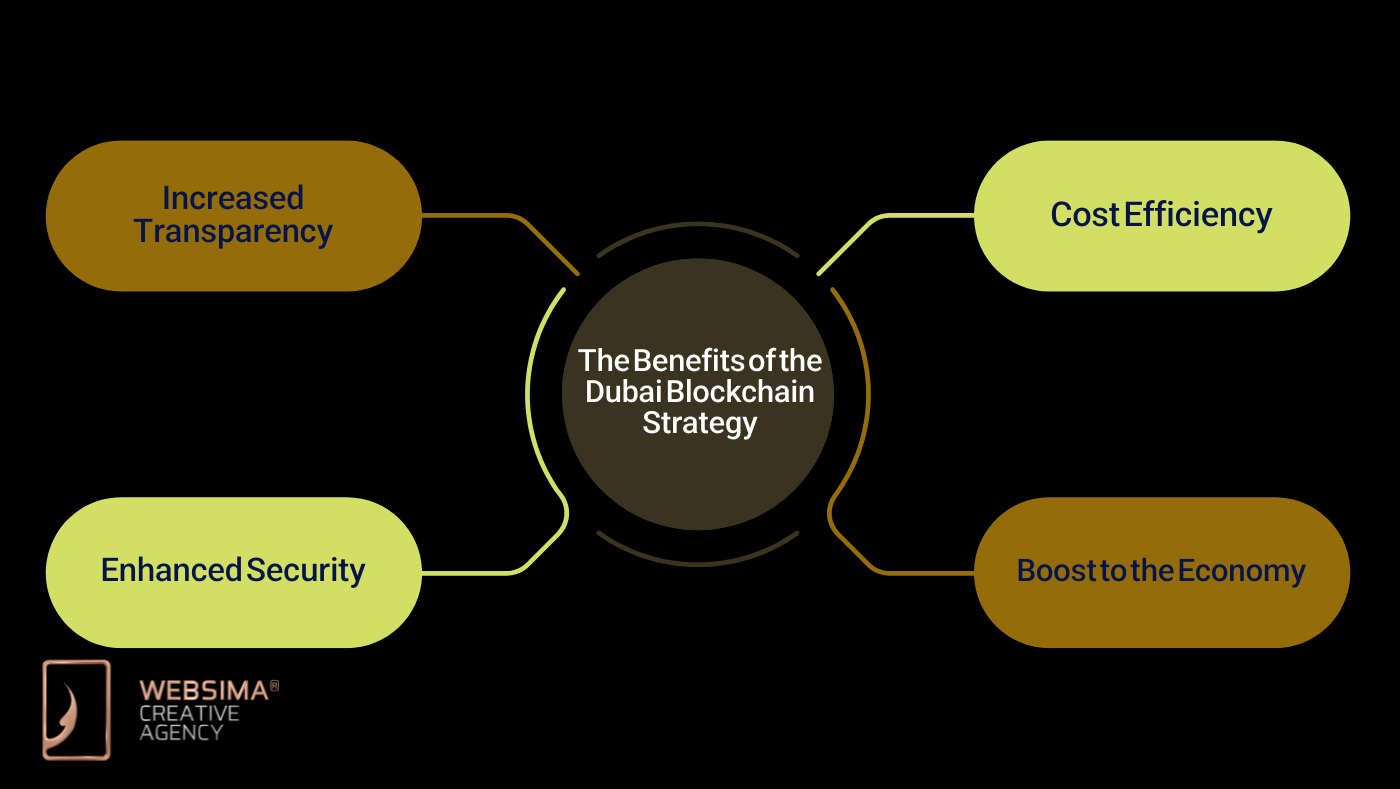
1. Increased Transparency
Blockchain’s decentralized and immutable nature ensures that all transactions are recorded transparently, making it easier to track and verify actions across various sectors. This transparency is particularly beneficial in areas such as government services, real estate, and finance, where trust is a crucial factor.
2. Cost Efficiency
By automating processes and eliminating intermediaries, blockchain can significantly reduce the costs of doing business. The Dubai Blockchain Strategy focuses on reducing the administrative costs of government services and business operations, which will ultimately lead to savings for both public and private entities.
3. Enhanced Security
Blockchain technology’s ability to secure data through encryption and immutability ensures that sensitive information remains safe from cyber threats. In addition, the Dubai Blockchain Strategy is enhancing security in sectors like healthcare and finance, where data protection is a top priority. As a result, these sectors benefit from increased trust and protection against potential security breaches.
4. Boost to the Economy
By fostering innovation and attracting blockchain-based businesses to the city, Dubai’s blockchain strategy is contributing to the overall growth of the economy. The strategy has created an environment where startups and established companies alike can thrive, leading to new business opportunities and economic expansion.
Final Words
The Dubai Blockchain Strategy is playing a vital role in shaping the future of Dubai and positioning the city as a global leader in blockchain technology. Focusing on government efficiency, industry innovation, and international leadership, Dubai is rapidly becoming a beacon of blockchain adoption. The strategy is already having a significant impact across sectors such as real estate, finance, healthcare, and logistics, driving digital transformation and enhancing transparency, security, and efficiency.
As blockchain technology continues to evolve, the Dubai Blockchain Strategy will remain a critical driver of innovation, helping the city become one of the most advanced and tech-savvy locations in the world.
About Websima
Looking to integrate blockchain technology into your business or develop blockchain solutions in Dubai? Websima is a leading blockchain service provider offering blockchain development, smart contract programming, Web3 integration, and more. We are here to help you navigate the evolving Dubai Blockchain Strategy and leverage blockchain for your business success.
Contact Websima today to explore how we can assist you in achieving your digital transformation goals. Get in touch.