Dubai has positioned itself as a leader in technological innovation, with the vision of becoming a global hub for smart cities and sustainable growth. At the intersection of these two goals lies Web3, a revolutionary decentralized internet powered by blockchain technology. While Web3 is primarily famous for its potential in reshaping digital economies, the role of Web3 in Dubai’s green initiatives is significant to build a more sustainable future.
Underpinned by the US$27.4 billion Dubai Green Fund, Dubai is seeking to revolutionise the renewable energy sector over the next three decades https://t.co/ul3ShiyeTa pic.twitter.com/OwpHpN1wPc
— Business Dubai (@BusinessDubai) November 28, 2018
In this article, we’ll explore how Web3’s role in Dubai sustainability is transforming the city’s green initiatives. By integrating blockchain technology into sustainable projects, Dubai is setting the stage for more transparent, secure, and efficient solutions for environmental challenges. From energy management to resource tracking and carbon credit systems, Web3 is proving to be a key tool in realizing Dubai’s sustainability goals.
Dubai’s Commitment to Sustainability
Today, we inaugurated the second phase of the Green Data Centre of Data Hub Integrated Solutions, at the Mohammed Bin Rashid Al Maktoum Solar Park.
The Centre is the world’s largest solar-powered data centre, Spanning 100,000 square metres.The project aligns with the objectives… pic.twitter.com/bVFeNRIC51
— Maktoum Bin Mohammed (@MaktoumMohammed) January 22, 2025
Dubai has set ambitious sustainability goals through a series of strategic plans. The aim is to reduce its carbon footprint, improving energy efficiency, and fostering environmental responsibility. In 2016, the Dubai Clean Energy Strategy 2050 was launched, aiming to make Dubai a global leader in clean energy. The strategy outlines initiatives for reducing carbon emissions, increasing renewable energy sources, and promoting green building practices.
Dubai is also home to the Dubai Green Economy Partnership, which promotes the use of innovative technologies for environmental sustainability. This forward-thinking approach along with Dubai’s crypto-friendly policies that impacts Web3 ecosystem positively, open doors for blockchain-based solutions, positioning the city at the forefront of integrating cutting-edge technologies with green initiatives.
1. The Dubai Clean Energy Strategy
The Dubai Clean Energy Strategy targets a substantial increase in the share of renewable energy in Dubai’s power grid. By 2050, the goal is to ensure that 75% of the emirate’s energy supply is from clean sources, with a focus on solar energy. Blockchain can aid this transition by enabling real-time energy tracking, decentralized energy trading, and efficient management of renewable energy sources.
2. The Dubai Sustainable Development Goals (SDGs)
In line with the United Nations Sustainable Development Goals (SDGs), Dubai has adopted a comprehensive approach to sustainability, targeting energy efficiency, waste management, and reduced carbon emissions. Blockchain technology plays an essential role in tracking progress toward these goals. Blockchain helps reaching the goal by providing transparent, verifiable data for public and private sector initiatives.
What is Web3?
Before diving deeper into the specific ways Web3 can help achieve Dubai’s sustainability goals, it’s important to clarify what Web3 entails. Web3 is the next evolution of the internet, one that’s decentralized and built on blockchain technology. Unlike Web2, which relies on centralized platforms for managing and storing data, the way Web3 works and the technology behind it, is to distribute control across a network of nodes, enabling direct peer-to-peer interactions.
In Web3, users have ownership and control over their data, digital assets, and even their identities. Blockchain technology underpins Web3’s decentralized architecture, ensuring transparency, security, and immutability of transactions and data exchanges. This makes Web3 a powerful tool for enhancing accountability and trust in sustainability initiatives.
How Web3 Supports Sustainability
Web3’s decentralized and transparent nature presents a unique opportunity to tackle some of the most pressing environmental challenges. Its applications in sustainability include energy management, carbon footprint tracking, waste management, and even enabling more efficient supply chains. Let’s look at how Web3 can support Dubai’s green initiatives.
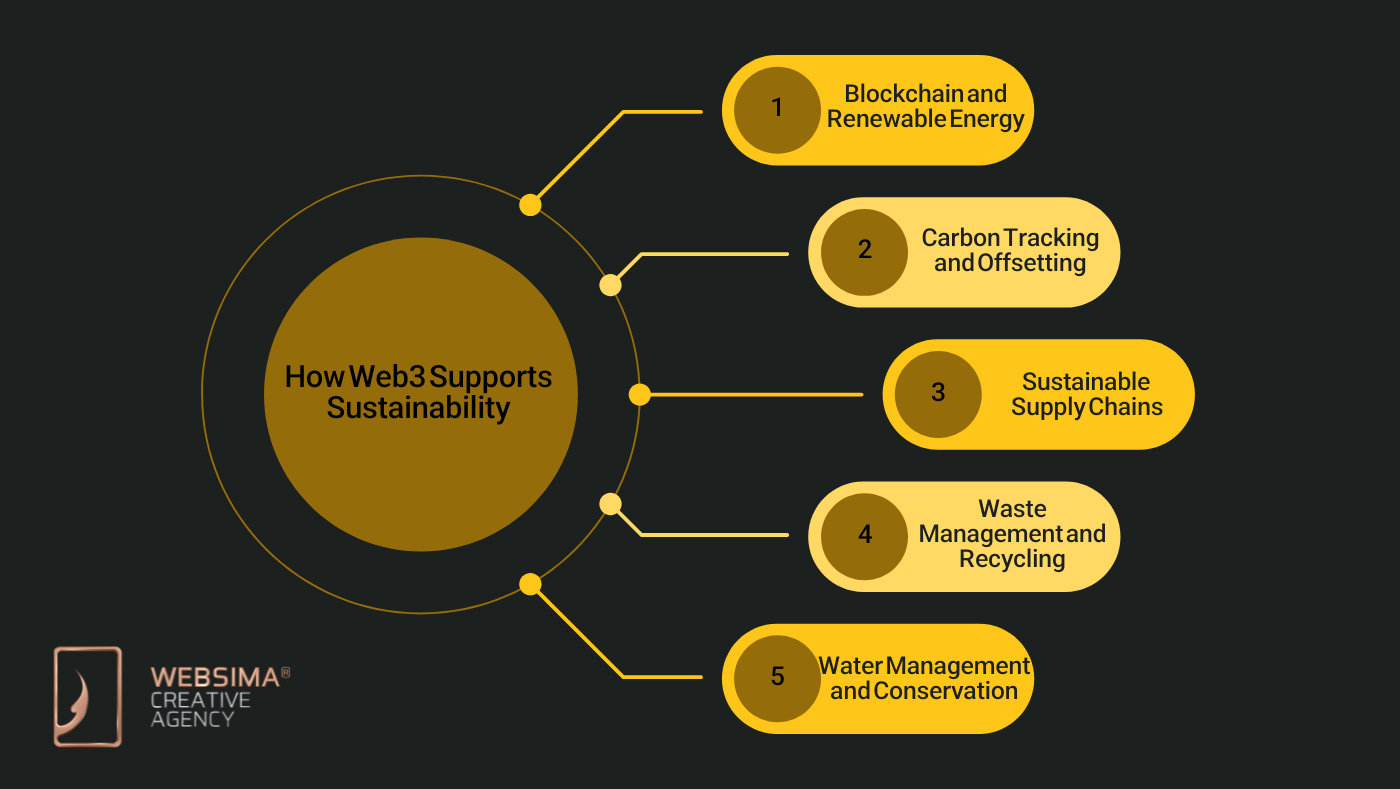
1. Blockchain and Renewable Energy
Dubai’s commitment to clean energy can be significantly bolstered by blockchain technology. Web3 offers a unique solution to the management and distribution of renewable energy, primarily through decentralized energy trading platforms. With Web3, energy producers and consumers can exchange energy directly, bypassing traditional intermediaries and reducing inefficiencies.
For example, blockchain enables peer-to-peer (P2P) energy trading. P2P allows individuals or businesses with solar panels to sell surplus energy directly to others in their community. This decentralized energy model not only increases energy efficiency but also promotes the use of renewable resources, making Dubai’s energy grid more sustainable.
In addition, smart contracts can automate energy transactions, ensuring that energy is bought and sold based on predefined terms without the need for intermediaries. This level of automation and efficiency reduces transaction costs and increases transparency, making the energy sector more sustainable.
2. Carbon Tracking and Offsetting
Blockchain technology creates a secure and transparent system for tracking carbon emissions, playing a vital role in achieving sustainability goals. By leveraging tokenization, organizations can track, buy, and sell carbon credits and offsets on blockchain networks, ensuring verifiable and transparent environmental claims.
In Dubai, businesses and individuals can use blockchain-based carbon credit systems to measure, reduce, and offset their carbon footprints. This decentralized approach holds each entity accountable for its environmental impact in a secure and transparent way. Web3 empowers companies and individuals to engage in blockchain-based carbon trading markets, driving carbon neutrality and fostering a competitive landscape for green initiatives.
3. Sustainable Supply Chains
One of the most significant challenges to sustainability is ensuring that supply chains are transparent and free from environmental exploitation. With Web3 and blockchain, Dubai can track the journey of products from raw materials to finished goods, ensuring that sustainable practices are being followed at every stage.
For instance, blockchain can verify the source of raw materials, ensuring that they are ethically sourced and produced in an environmentally responsible manner. Additionally, smart contracts can automate compliance with sustainability standards, ensuring that products meet environmental criteria throughout the supply chain.
This level of transparency is particularly important in industries like fashion, agriculture, and construction, where the impact on the environment can be substantial. By using blockchain to track and verify sustainability practices, Dubai can ensure that its businesses operate in a responsible and eco-friendly manner.
4. Waste Management and Recycling
Dubai actively reduces waste and promotes recycling, aiming to divert 75% of its waste from landfills by 2021. Blockchain technology plays a crucial role in waste management by tracking waste generation, disposal, and recycling processes. Waste management companies can use blockchain to record each step of the recycling process, ensuring proper sorting and recycling of materials.
Additionally, blockchain supports incentive-based recycling programs. For example, authorities can reward residents with blockchain-based tokens for recycling, allowing them to redeem these tokens for goods or services. This decentralized system incentivizes environmentally responsible behavior and increases participation in recycling programs.
5. Water Management and Conservation
Water scarcity is a critical issue in the Middle East, and Dubai is investing in water conservation technologies to ensure sustainable water management. Blockchain can contribute to water management by enabling real-time monitoring of water usage across sectors like agriculture, industry, and households.
Through blockchain, Dubai can implement a decentralized water tracking system, which would allow for accurate monitoring of water consumption at various levels. By using smart contracts, the city can also enforce water conservation regulations, automatically adjusting water usage based on availability and need. This can help reduce waste and ensure that water resources are used efficiently.
The Dubai Green Blockchain Ecosystem
Dubai has been proactive in building a robust ecosystem for blockchain and sustainability. The Dubai Blockchain Strategy 2020, which aims to make Dubai the first city fully powered by blockchain, has set the stage for leveraging blockchain in all sectors, including sustainability. The city has already launched several blockchain-powered green initiatives, positioning it as a global leader in integrating Web3 with environmental responsibility.
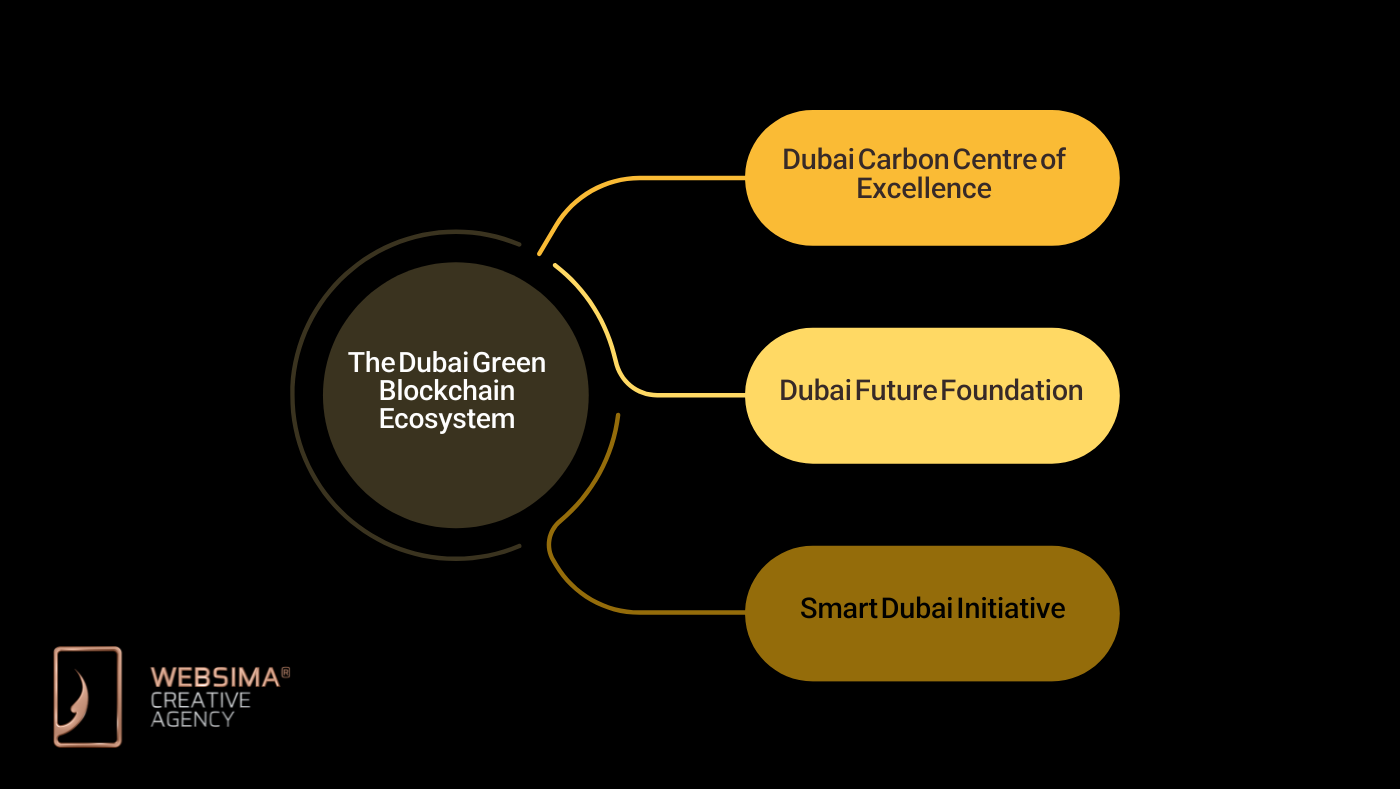
1. Dubai Carbon Centre of Excellence
The Dubai Carbon Centre of Excellence (DCCE) is an initiative that promotes sustainable development and supports carbon management efforts across industries. By incorporating blockchain and Web3 technologies, the DCCE can enhance the transparency and efficiency of carbon reduction programs. Blockchain can track emissions reductions, making it easier for businesses to participate in carbon offset programs.
2. Dubai Future Foundation
The Dubai Future Foundation supports innovation and the development of futuristic technologies in the UAE. This foundation is fostering research into how blockchain and Web3 can be utilized to address environmental challenges, including waste reduction, water conservation, and energy efficiency. By promoting Web3’s integration with green initiatives, Dubai is positioning itself as a global model for sustainable urban development.
3. Smart Dubai Initiative
The Smart Dubai initiative seeks to transform Dubai into the world’s smartest city. That would be happening by leveraging cutting-edge technologies, including blockchain and Web3. The initiative focuses on improving energy management, transportation, and overall urban efficiency. Web3’s decentralized nature fits perfectly with the goals of Smart Dubai. The technology ensures that the city’s smart systems are transparent, efficient, and sustainable.
Challenges and Future Outlook
While Web3 and blockchain offer immense potential for supporting sustainability, there are challenges that need to be addressed. One major issue is the scalability of blockchain systems. As blockchain networks grow, the energy consumption of certain consensus mechanisms (such as Proof of Work) can negate the environmental benefits of Web3.
Additionally, there’s the need for standardization and regulatory frameworks that ensure the proper implementation of Web3 for sustainability. Governments, industries, and organizations will need to collaborate to create common standards that facilitate the integration of blockchain into sustainability initiatives.
Despite these challenges, the future of Web3 and sustainability in Dubai looks promising. The emirate’s commitment to technological innovation and environmental responsibility creates a fertile ground for Web3 to drive sustainable growth and environmental stewardship.
Bottomline
Web3’s role in Dubai sustainability is an exciting frontier that blends cutting-edge technology with environmental responsibility. Through blockchain, Dubai is enhancing its clean energy goals, reducing carbon emissions, promoting transparency in supply chains, and improving waste management practices. By integrating decentralized solutions with green initiatives, Dubai is paving the way for a more sustainable future.
Websima, as the leading blockchain service provider in Dubai, is more than happy to help, if you are planning to start a blockchain-based business in Dubai. Blockchain, crypto and web3 web and website development, smart contract programming and development, Blockchain, Web3 and crypto company establishment are just a few out of many services that we provide. Feel free to contact us to book for a free consultation meeting with our talented team.